As I was watching it I immediately thought of Clay from Robot Stories. The plot lines are crazy similar: human man in love with robot female. But the key difference is the race factor - one film features a racially diverse cast whereas the other is predominately white (classic Hollywood...). It's interesting then to think about the actual, significant differences race makes in each story. Why choose an Asian male versus a white one? What merit does a certain race bring to a film? Or does it only matter because of the lack of representation for minority groups? So many questions!

Saturday, February 20, 2016
Her
A friend of mine recently sent me the link to the trailer of Her -
As I was watching it I immediately thought of Clay from Robot Stories. The plot lines are crazy similar: human man in love with robot female. But the key difference is the race factor - one film features a racially diverse cast whereas the other is predominately white (classic Hollywood...). It's interesting then to think about the actual, significant differences race makes in each story. Why choose an Asian male versus a white one? What merit does a certain race bring to a film? Or does it only matter because of the lack of representation for minority groups? So many questions!
As I was watching it I immediately thought of Clay from Robot Stories. The plot lines are crazy similar: human man in love with robot female. But the key difference is the race factor - one film features a racially diverse cast whereas the other is predominately white (classic Hollywood...). It's interesting then to think about the actual, significant differences race makes in each story. Why choose an Asian male versus a white one? What merit does a certain race bring to a film? Or does it only matter because of the lack of representation for minority groups? So many questions!

Thursday, February 18, 2016
DDR: Guide Away
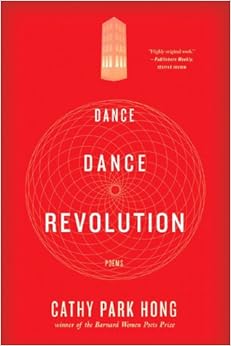 Picking up and reading through Cathy Park Hong's poetry collection titled Dance Dance Revolution has been nothing short of puzzling, exciting, and new. Most of the poems are spoken by the Tour Guide - though her words are apparently edited at times by the Historian - in 'Desert Creole,' a language that is a bit of every language.
The poem 5. Atop the St. Petersburg Dome is one such example of the Tour Guide's typical style of speaking. But more importantly, the poem's re-telling of a bit of the Tour Guide's personal history made me think of her relationships with honesty and history.
As we know, the hotel guide is bald and wears wigs to cover her scalp (she even says she has "wig-rash") (34). Then when I read the lines "a game show lass / wit no appliance to show," which imply that there is no great goal or reason why the guide still gives her tours, I thought about how perhaps the reason she gives tours is because they lend her the opportunity to direct attention away from herself and her troubled background (34). Just like her wigs, giving tours could be a one of the Tour Guide's defense or coping mechanisms.
Monday, February 8, 2016
Hierarchy
Language, words, slang - they uncover more about us and society than we think. The way we communicate today as opposed to ten years ago can show us where we are now, what's important to us, and how things have changed.
When Anna spoke down about 'sub-80s,' and Henry asserted that "everyone [in the bar] is a quality person" because they were all 'plus-80,' their words betrayed the influence EI scores had on their language. Moreover, they perpetuated a sort of caste system that values people based on numbers versus actual personality (science fiction, anyone?).
In almost every work we've read or seen, a hierarchy has been at place. Sometimes on the basis of race, other times on the basis of class, and still other times on other foundations. The hierarchy in Snowpiercer, for instance, was one that existed due to the difference in carriages within the train, which translated to a difference in class. Snowpiercer's a great example of hierarchy too since the rungs on the ladder are so clearly laid out.
In terms of how hierarchy plays into our study of Asian-American science fiction, it's clear that hierarchies exist in our society in the forms of discrimination and prejudice against POC's and minority groups. Representation in films like Everything Before Us and Robot Stories is one method of breaking down such systems.
Subscribe to:
Posts (Atom)